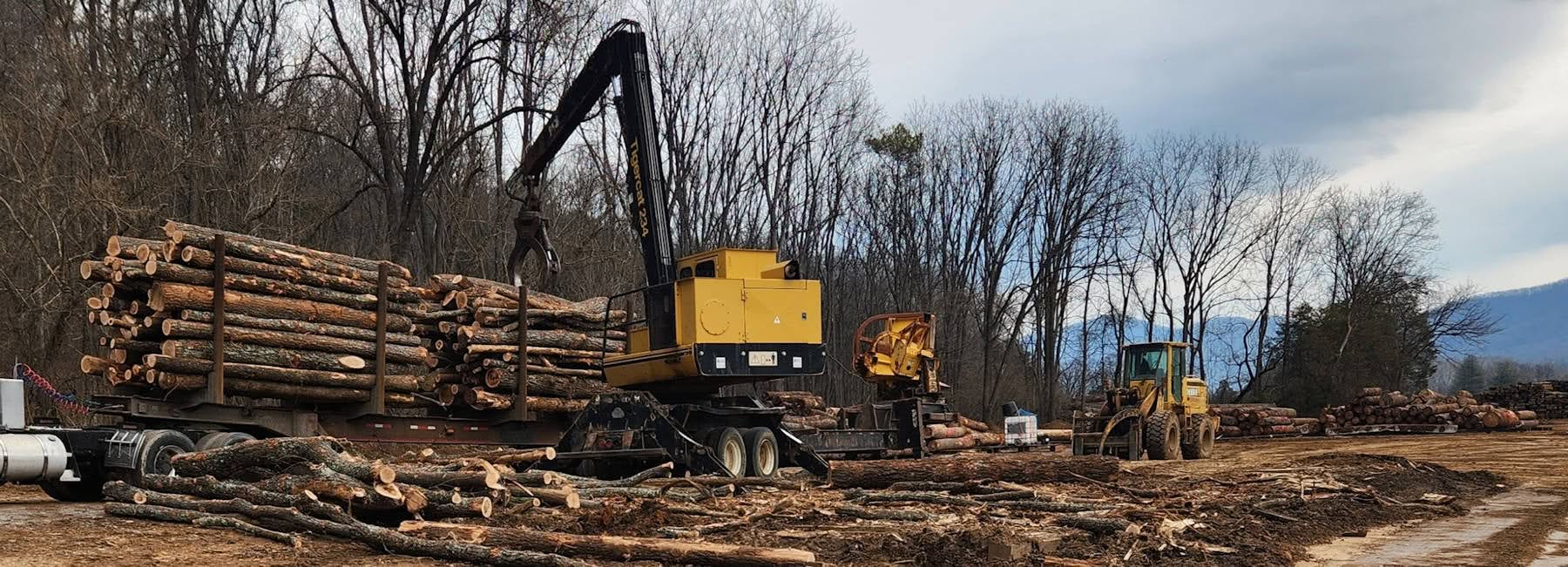
Active forest management can take on a vast variety of forms. Timber harvesting is the backbone of management. Selling the harvested timber generates money to pay for the desired work to be done. I am going to discuss a couple forest management styles commonly used in the hardwood forest of Virginia.
Overstory Removal
This process removes all the overstory trees on a given tract, plot or designated boundary. Almost referred to as clear cutting, it gets a bad reputation. If used correctly it is a great tool for forest management. This method removes all the trees in an area, which allows direct sunlight to penetrate to the forest floor. The increase in light and warmth promotes rapid regeneration. Stump sprouts from harvested trees and seeds on the ground race upward for the light. This method is not perfect for every forest type or topography. It is widely used in the black cherry forest of northwestern PA and Southwestern NY. Black cherry seeds and seedlings grow the best in full sun.
Shelterwood
Often called “select cut” or “selection thinning”. Trees are selected to be left and other selected to be harvested. This method creates an uneven aged stand. This allows the leave trees to reseed the surrounding forest for a number of years. This method is widely used in the mixed oak forest. The shelterwood style leaves trees for seed and for shade. The shade helps oak seedling get a foothold so they can out compete sun loving pioneer species like black cherry, black birch, gum, etc.
Once sufficient regeneration has grown, ~5-10 years, the overstory trees are removed to make room for the next generation of trees. This also has the benefit of thinning the younger trees to reduce competition.
A variety of styles can be used on one tract depending on the forest cover type, soil, slope, hydrology, and goals set by the landowner. Small areas with the forest can be cleared to create wildlife opening. Shelterwoods are normally done along streams and buffer areas to reduce direct sunlight from reaching the water. Another tool we use is to do nothing. Not all forests need an active timber harvest to be in active forest management. Proper management requires us to know what our forests need or don’t need.
Contact us for more information.