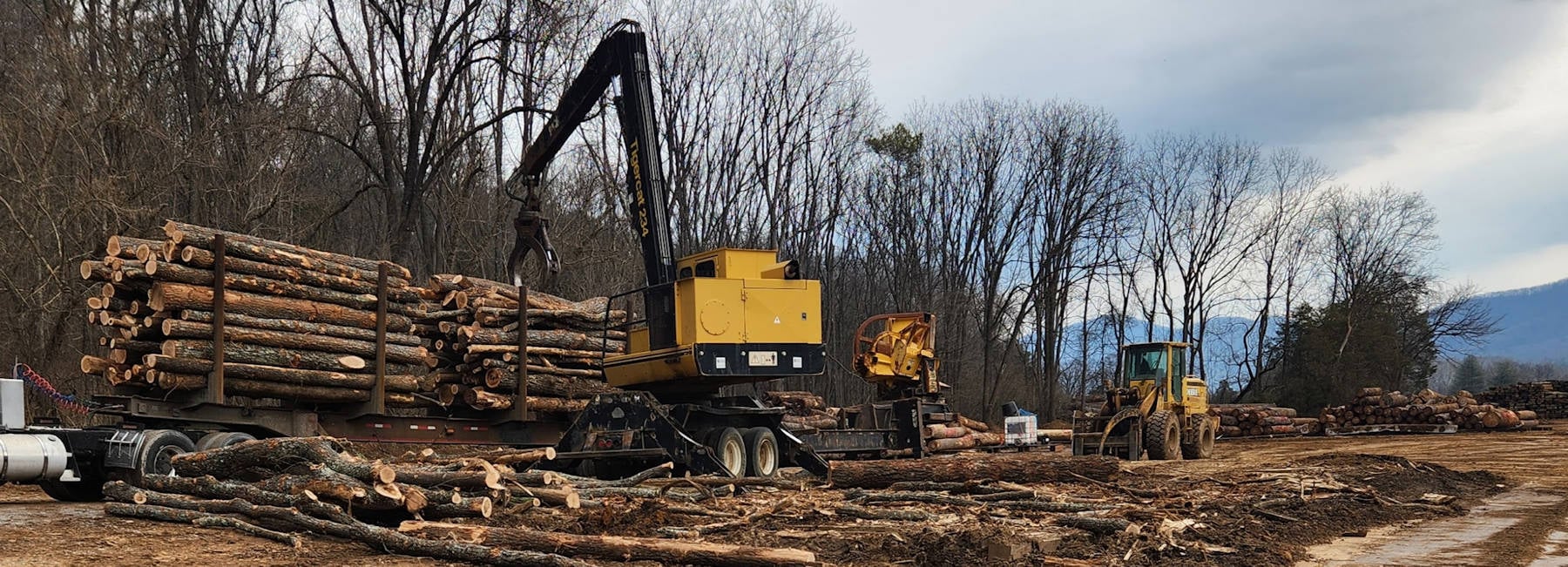
The simple answer is any wood fiber used to make pulp, which is used to make paper, cardboard, and other fiber-based paper products. Wood in the form of small logs or “sticks” are debarked, chipped, cooked in hot water, and formed into paper products. These products vary greatly in appearance and from; textbook paper, brown grocery bags, newspaper, beer boxes, wrapping paper, tissue and toilet paper, diapers, etc.
Pulpwood is usually divided into two groups hardwood pulpwood and softwood pulpwood. Softwood fibers are longer and stronger. They are used in cardboard, paper bags, boxes etc. Hardwood fibers are shorter and finer making them ideal for textbooks, photo paper, etc. The fibers can be mixed depending on the recipe for the desired product and outcome.
Fiber can be sourced directly from the forest as round wood or chips. In woods chippers can be fitted with fail debarkers to remove the bark from trees before chipping. Chippers are expensive to run and maintain in the woods. They are not as common west of the Blue Ridge since hardwoods are more difficult to debark prior to chipping.
Chips can also be sourced from other wood-based production operations. Sawmills, stave mills, veneer mills usually chip their waste and sell it to local papermills or other buyers of fiber-based products.
Bark can not be used in the paper making process. Along with sawdust it is burned to provide electrical power and steam for the pulping process. Dirty chips, wood chipped with the bark still on, are purchased for fuel as well.